
Fueled by rapid population growth and the world’s highest birth rates, Sub-Saharan Africa is poised to play a critical role in the twenty first century as the largest global labor source. At the same time, the arrival of AI and the clean energy transition have fueled demand for African critical minerals such as lithium, cobalt, copper, and nickel. This presents a generational opportunity for Africa to become the labor and resource engine of the tech revolution.
The United States also stands at a unique precipice. While locked in an AI and technological arms race with China that relies heavily on critical minerals, President Trump has made a dramatic shift to an “America First” foreign policy and economic agenda that seeks to renegotiate America’s standing in the world. How can the United States ensure access to critical minerals for the tech revolution while ensuring its own growth, prosperity, and continued influence across the globe? One answer may be transformative commercial investment in Africa.
Connecting the United States and Africa in a new strategic and economic alliance will require America to dramatically shift its views on opportunities, challenges, and risk on the continent. While the United States grew on the drive and passion of builders, entrepreneurs, and frontiersman, it has forgotten that ethos. America must now re-embrace and channel its frontier spirit to invest, build, and secure AI supply chains in Africa. This is imperative to securing the future of America’s AI revolution.
A Transformative Population Shift
Global demographic changes due to falling birth rates will drive the geopolitics and economics of the twenty first century. The G7 countries currently maintain 9.75 percent of the global population, a birthrate of 1.43 births per woman, and 44 percent of global GDP.1,2 Sub-Saharan Africa has almost 20 percent of global population, an average birth rate of 4.32 births per woman, and proximately 2 percent of global GDP.3 This will result in Africa being home to 2.9 billion or 28 percent of the world’s population by 2080, a population that could potentially fill the coming labor shortage across the Global North.4
This transformation represents a likely swing of economic influence to Africa over the next century. While development remains slow and the continent continues to struggle with core challenges such as water, infrastructure, and education, the United States and the West cannot overlook the tectonic demographic shifts that will transform the global economy. Ubiquitous access to smart phones, the spread of satellite internet, and overall democratization of education will grow Africa’s human capital and technical skillsets that have required western education and training for decades.5 This represents a critical opportunity for the United States to reprioritize engagement in Africa and begin to build strategic economic relationships for the twenty first century.
The AI Impetus
The arrival of the AI and tech revolution could not come at a better time for the continent. The world’s growing dependance on the critical minerals that fuel the AI arms race and clean energy transition has thrust Africa to the forefront of global politics and U.S.-China competition. The Democratic Republic of the Congo (DRC) alone produces over 70 percent of the world’s cobalt, while the “copper belt” region between DRC, Zambia, and Angola produces 25 percent of global copper, both critical minerals to produce batteries and AI infrastructure.6 These nations also possess incredibly high ore grades, making extraction more profitable and efficient.7 This resource dependency is expected to increase demand by 500 percent for lithium, 200 percent for graphite and nickel, 50-60 percent for cobalt, and 30 percent for copper by 2040.8
The United States has just begun to grasp the reality that China has secured access to massive reserves of these minerals in the DRC, Zambia, and elsewhere. At the same time, China has positioned itself as the global hub for critical mineral processing by dominating 72 percent of global lithium refining, 68 percent of cobalt refining, and 83 percent of global lithium-ion battery manufacturing.9 The United States is playing catch up in a sector that requires long term investments. It must act now to secure the future of America’s AI dominance.
A History of Challenges
A strategic reprioritization with new investment in Africa is easier said than done. Colonial exploitation and extraction have created skepticism and mistrust of renewed Western influence. Additionally, many power arrangements favor a continuation of the status quo and many countries still struggle with corruption, political instability, infrastructure, and education.
While some Western corporations have operated in Africa, a system centered on development aid has failed to create a business environment attractive to wider investment. Real and perceived risks have limited commercial engagement, despite the growing national security implications of AI supply and energy chains centered around China. As a result, Africa remains drastically underexplored by Western companies.10 American companies and leaders must reembrace the frontier spirit to move past hesitation and make a new strategic investment in Africa.
Seizing the Opportunity
The United States government should consider the following policy changes to incentivize private investment and initiate a strategic reprioritization of Africa:
- Increase the budget of the Development Finance Corporation (DFC), with a focus on exploration projects in Sub-Saharan Africa. Since 2018, the DFC has functioned as the U.S. government’s main response to the Chinese Belt and Road Initiative, but continues to be outspent by China $29 billion to $12 billion on the continent.11 The United States must match and ultimately surpass the Chinese commitment to build momentum for U.S. commercial interests in African markets.
The DFC should prioritize investments in Africa in exploration and multiparty projects. These projects should look to vertically integrate supply chains and long-term industrial capability on the continent. This will offer a unique model for African commercial engagement focused on relationship-building as opposed to mere extraction. Implementation for these programs should rely on decentralized, embassy-level decision making that reduces barriers to junior companies. - Massively increase U.S. commercial focus at U.S. embassies. This will reflect the renewed prioritization of commercial diplomacy over development aid. Aside from the DFC, expanded commercial presence should include the Export-Import Bank of the United States (EXIM), the U.S. Treasury Department, the Department of Commerce, the U.S. Geological Survey (USGS), and others.12 These agencies must work aggressively with African governments to facilitate access and entry for new U.S. investment by helping navigate local bureaucracies and legal systems. Such agency presence can also advise African partners on how to attract capital and reduce barriers to market entry.
The USGS specifically can help to expand mapping of geologic resources across Africa and facilitate entry of US tech companies focused on exploration.13 This is needed to help make capital more efficient and can help reduce barriers to future investment. If companies can leverage U.S. government assistance and resources for exploration, they can apply assets elsewhere in the supply chain. - Establish a Fellowship aligned with the Development Finance Corporation to attract top talent to support U.S. commercial diplomacy. Such a fellowship would need to align to top tier MBA programs or current professionals in investment banking, venture capital, private equity, or finance. The fellowship could offer either funded or purely professional development tracks.
This type of program would bridge talent from the financial and banking sectors to foreign policy, catalyzing a commercial diplomacy transformation. This would also rekindle a frontier focused mindset in the American financial sector while changing the perception of doing business in Africa.
Imagining the Future
Now is a unique chance for the United States to strategically reevaluate policy towards Africa. While the United States has failed to fully invest and embrace Africa for decades, the status quo does not have to persist. The future can be different.
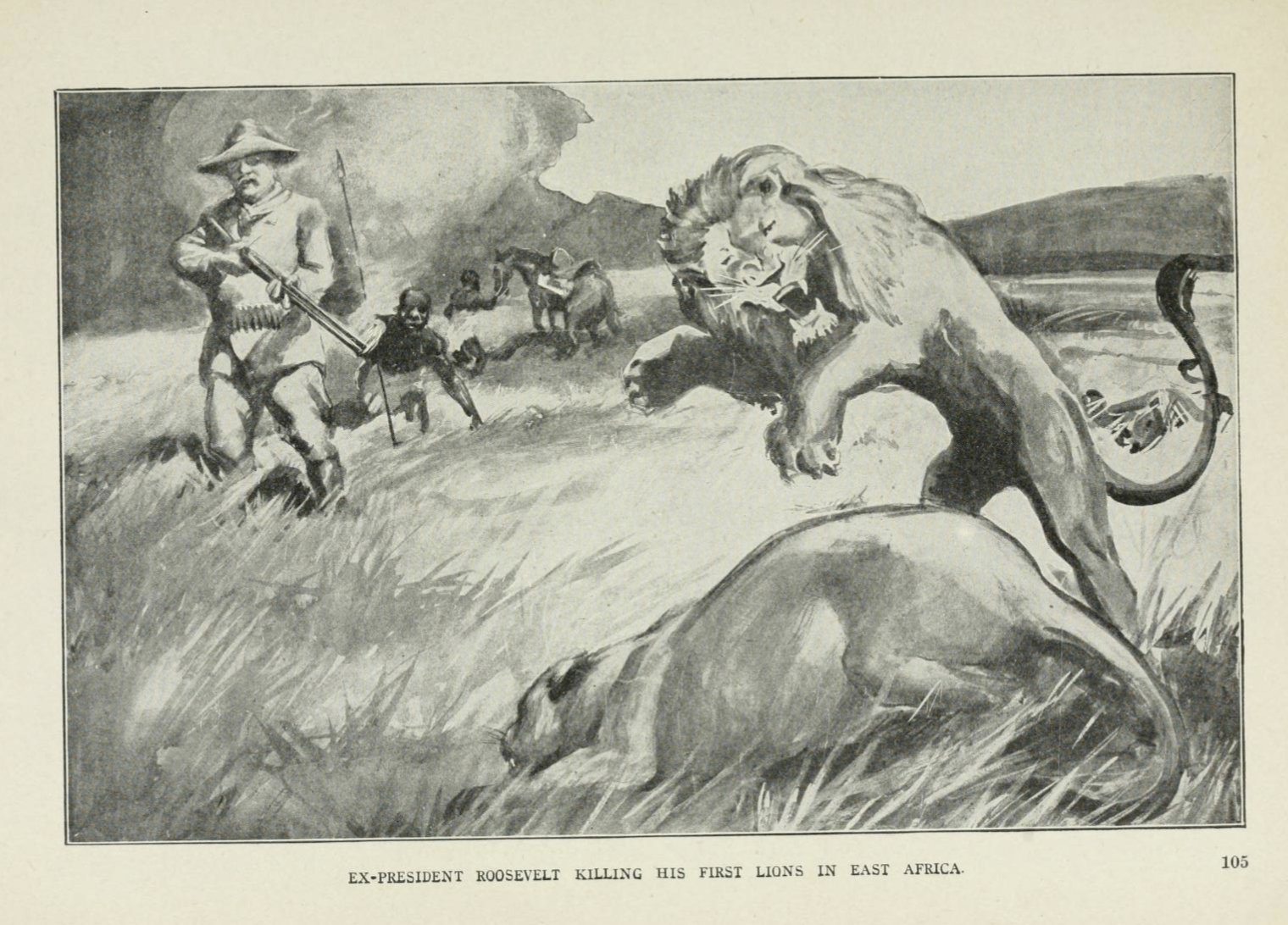
In his writings, Theodore Roosevelt explicitly called for the nation to embrace American exceptionalism and the strenuous life that had been critical to the nation’s rise. As the United States pioneers in the AI revolution, it now faces a different moment, a moment where it must resist isolationism to become the “Man in the Arena” and recapture the exceptional frontier spirit of its history.14 Failure to do so, would be tragic and would cede the future of the ongoing technological revolution to Beijing, while failing to recognize the African trajectory. It is time for a bold, new direction. It is time for the United States to commit to the African arena.
- United Nations, Department of Economic and Social Affairs, Population Division, UN Data Portal. ↩︎
- World Economics, “G7 Economic Data | 2025,” World Economics, updated July 2025. ↩︎
- “Africa,” WorldPopulationReview.com; United Nations, Department of Economic and Social Affairs, Population Division, World Population Prospects (WPP) Online Database, online edition, 2024 revision; International Monetary Fund, *World Economic Outlook Database, April 2025*, table “Sub-Saharan Africa” (WEO, April 2025).
↩︎ - United Nations, Department of Economic and Social Affairs, Population Division, World Population Prospects 2024: Probabilistic Projections — Total Population Graphs. ↩︎
- Awode, Segun Subair, and Musa Olanrewaju Oduola. “The interplay between technological innovation and human capital development in driving industrial productivity and competitiveness in Africa.” Journal of Economics and Development 27, no. 1 (2025): 56–71. ↩︎
- Cobalt Institute, Cobalt Institute Fact Sheet 2023 (London: Cobalt Institute, February 2023), 1–2; Peter Laznicka, Giant Metallic Deposits: Future Sources of Industrial Metals (Berlin: Springer, 2010), 438. ↩︎
- Carl‑Johan Karlsson, “The DRC’s Unparalleled Resource Potential,” Global Business Reports, July 24, 2019. ↩︎
- International Energy Agency, Global Critical Minerals Outlook 2025: Overview of Outlook for Key Minerals (Paris: IEA, May 21, 2025). ↩︎
- Resource Trade Earth, Critical Metals & EV Batteries, Resource Trade Earth. ↩︎
- Gracelin Baskaran, “Underexplored and Undervalued: Addressing Africa’s Mineral Exploration Gap,” Center for Strategic and International Studies, May 9, 2025. ↩︎
- Andrew Herscowitz, testimony, U.S. International Development Finance Corporation, House Foreign Affairs Committee, June 14, 2023, in “Assessing U.S. Efforts to Counter China’s Coercive Belt and Road Diplomacy,” DFC; U.S. International Development Finance Corporation, “DFC Expands Global Impact With Record‑Breaking Investments in Fiscal Year 2024,” DFC press release, October 24, 2024 ( details include Lobito Corridor investment ofF $553 million); Green Finance & Development Center, China Belt and Road Initiative (BRI) Investment Report 2024, figure showing BRI engagement in Africa reached $29.2 billion (34% growth), comprised of $16 billion in construction contracts and $13 billion in direct investments. ↩︎
- Gracelin Baskaran, “Building Critical Minerals Cooperation Between the United States and the Democratic Republic of the Congo,” Center for Strategic and International Studies, March 29, 2025. ↩︎
- Ibid. ↩︎
- Theodore Roosevelt, “Citizenship in a Republic,” speech delivered at the Sorbonne, Paris, France, April 23, 1910, in The Strenuous Life: Essays and Addresses (New York: The Century Co., 1910), 270–289. ↩︎